Published on: October 2, 2026 at 7:10 am
On September 7, the Belgian Football Association announced that it would not support Gianni Infantino’s reelection as the president of the International Federation of Association Football (FIFA) unless it receives satisfactory answers about his handling of the Folarin Balogun red-card controversy. This announcement may prove more important for Infantino’s future than years of criticism from “outsiders,” such as journalists, fans, politicians, and activists.
Why? Because in organizations such as FIFA, not all criticism carries the same weight.
I developed a “spiral of silence” explanation of how changes happen—or fail to happen—in fields and organizations in a 2015 Academy of Management Review article coauthored by Academy of Management Scholar Thomas Roulet. We argued that some fields and organizations remain relatively impermeable to outside pressure. Their members may know that public opinion is hostile to a particular practice, decision, or leader yet continue supporting it because what matters most is field opinion: what other insiders believe and are willing to say publicly.
FIFA is a striking example. Its president is not elected by football supporters or directly accountable to journalists, fans, or governments. He ultimately depends on FIFA’s member associations. This structure can insulate a president from significant external criticism as long as insiders continue to support him, or, at a minimum, remain silent.
But silence can unravel.
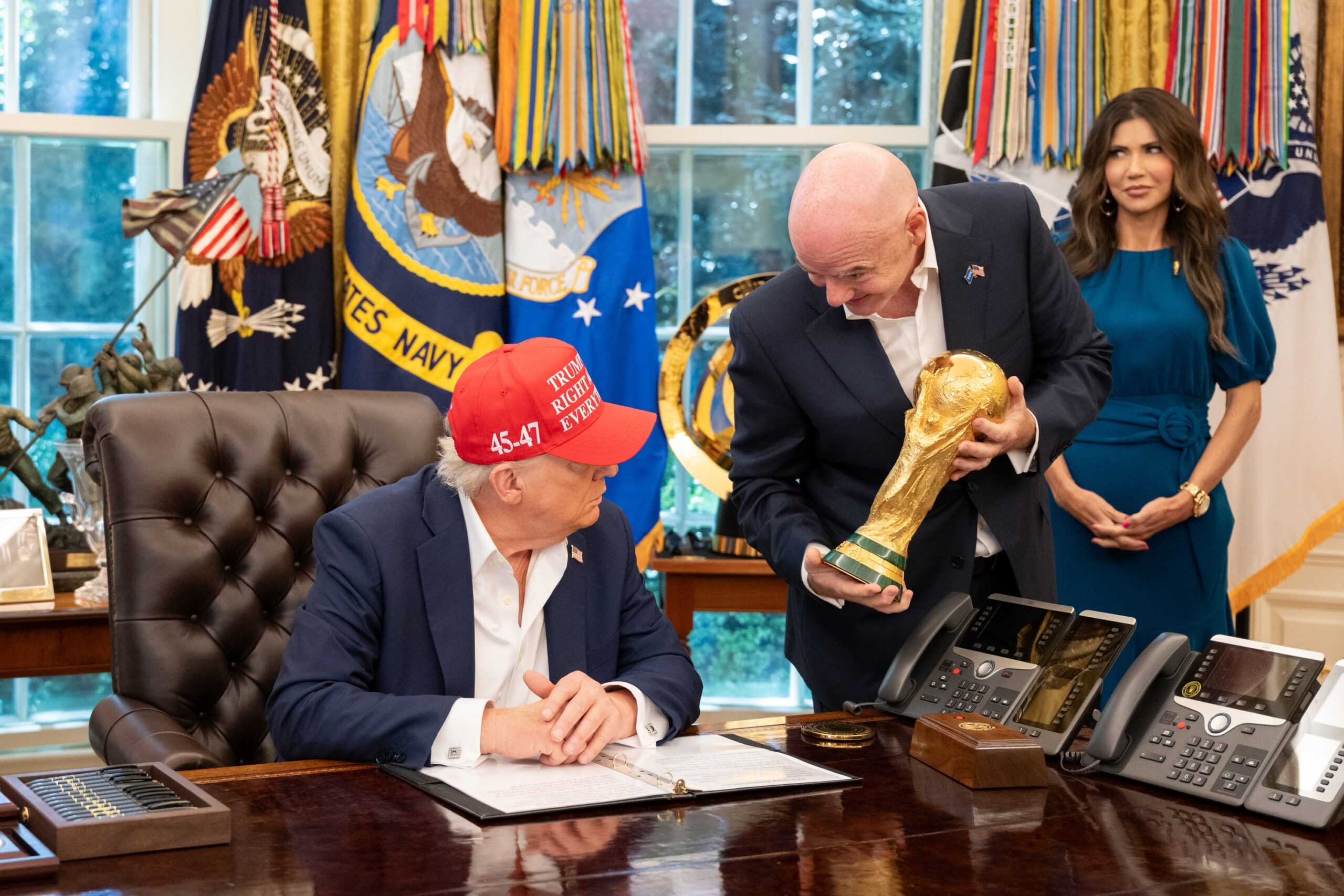
The Balogun controversy may have been the trigger. After U.S. President Donald Trump himself confirmed that he had asked Infantino to review Balogun’s red card during the World Cup, and FIFA’s disciplinary bodies suspended the automatic one-match ban for a year. This case seemed different from previous controversies. Earlier criticisms of Infantino often concerned governance lapses, political relationships, commercialization, and ethics breaches. The Balogun episode appeared to touch on something closer to the core identity of the field: whether football’s rules apply independently and equally to everyone.
This is maybe the reason why, this time, a prominent insider—the Union of European Football Associations (UEFA)—responded that the decision had crossed a red line, arguing that the consistent application of football’s rules was essential to the integrity of the game.
Once credible insiders begin voicing opposition, they change what other insiders perceive as acceptable to say. A federation that privately doubts Infantino may remain silent while it believes it is isolated. But when UEFA, Norway, Belgium, and others speak publicly, each new voice can make it easier for the next one to speak up.
Two trajectories are now possible. Insider opposition could stall, leaving Infantino with a durable majority, or additional federations could conclude that opposition is becoming the new prevailing field opinion, producing a rapid cascade that further erodes Infantino’s crumbling support base.
This is the paradox of locked-in leadership: The same structures that protect powerful leaders from outside criticism can make their decline surprisingly rapid once insiders break their silence.
So, if we want to know whether Infantino will survive, the key question is not how angry football fans become. Rather, it is: Who inside FIFA speaks up next?