Published on: April 14, 2026 at 4:24 pm
By Nick Keppler
How can a concept from psychology help you get a leg up in your career development? Vicarious learning describes lessons that people glean from others’ experiences. It is an important part of individuals’ growth. It is also crucial for the improvement of organizations.
“Every organization wants other people to learn from a mistake or an error or a best practice that happened somewhere else,” said Academy of Management Scholar Christoper Myers of Johns Hopkins University. “If you’re a large multinational or even regional organization with a practice that works really well in one unit or office, you would want it spread to the other units.”
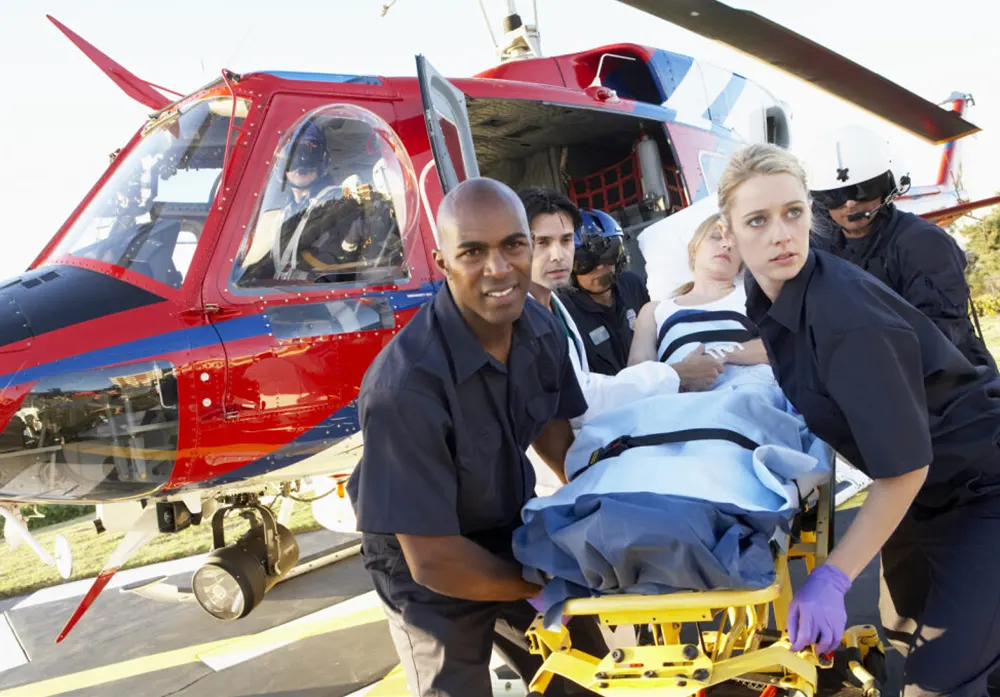
Vicarious learning also occurs more informally between individuals within an organization and can be a driver of skills development and efficiency. Myers studied this process among medical air transport crews.
“These are teams that fly, generally by helicopter, to the scene of a car accident or between hospitals to transport patients rapidly and with a high level of care,” he said.
These teams’ core function is flying patients from one hospital to another, usually a larger one better equipped for providing care given their serious medical condition.
These crews encounter a wide variety of sometimes unpredictable situations, so their work practices seemed like an ideal way to study the power of informal, person-to- person transmissions of knowledge.
“What I found is that they certainly do a lot of formal training and education, but they did a lot of just informal storytelling,” Myers said.
This reserve of knowledge gained from vicarious learning can save lives. An interviewee told Myers about their response to a patient with a snakebite. This interviewee had heard the story of a coworker who had previously flown a snakebite victim and knew that zoos can have a stock of antivenom that hospitals might not. Based on this story and the lessons gleaned from it, the crew transporting this new snakebite patient prepared to stop at a zoo before returning with the patient to the hospital.
Like everyone else on the crew, the team member who generated this idea had never treated a snakebite victim before, but they had heard about another incident from another crew member at another job.
“This was somebody who knew how to treat this patient, not just because of any formal training that they’d done or any simulations or practice, but because they had heard somebody else talking about it one time,” said Myers.
It shows how vicarious learning based on unstructured conversations between individuals can make up for knowledge gaps that decades of direct experience cannot.
“You might fly one snake-bite victim in your whole career—you might fly zero or you might fly 12,” said Myers. “There are folks who are quite senior in the organization who’ve never seen a particular type of transport.”
“It’s a fascinating setting to understand how we can use these informal storytelling and knowledge-sharing practices to really build not just a sense of how we do things around here, but very tactical, concrete, task-relevant information,” he said.