
Published on: June 5, 2026 at 11:50 am
While the late Academy of Management Scholar Karl Weick (1936-2026) of the University of Michigan is best known for his theories on “sensemaking,” his ideas about organizational behavior and psychology had an impact on government agencies and businesses that try to manage the natural world.
Academy of Management Member Jason Good of Aquinas College was the second to last doctoral student whom Weick advised before retiring. Good had convinced Weick to be part of Good’s doctoral dissertation committee by explaining how he wanted to study commercial fishing through the lens of Weick’s oft-cited research on sensemaking focusing on how people and groups find meaning in ambiguous, unexpected, or chaotic situations.
“Karl is well known for his rich and varied theoretical interests—resilience, systems thinking, process thinking, individual and organizational psychology, improvisation, reliability, mindfulness—but he was perhaps equally interested in practical contexts, particularly in improving how processes play out within them,” Good said.
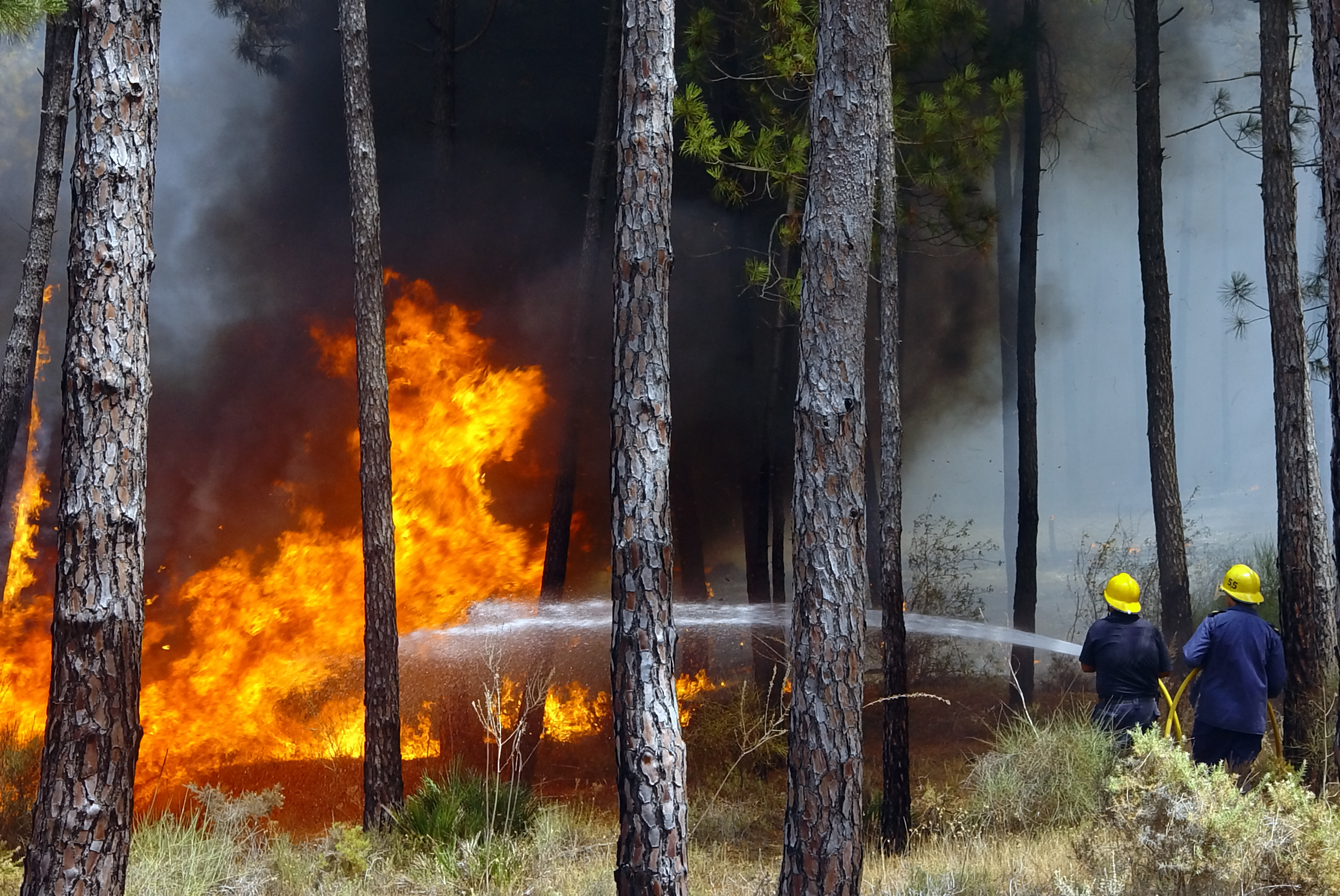
For instance, in addition to engaging with the medical profession, Weick worked with the U.S. Forest Service, the Bureau of Land Management, and related agencies and organizations as he tried to translate his work into real-world, life-saving outcomes.
Most of Weick’s work in this area focused on organizational resilience, particularly in collaborations with Academy of Management Scholar Kathy Sutcliffe and Academy of Management Scholar David Obstfeld, Good noted.
Evidence of Weick’s success includes:
- A special 2008 issue of Fire Management Today devoted almost entirely to High Reliability Organizing, including an article by Weick and Sutcliffe.
- Bureau of Land Management leadership training materials using Weick and Sutcliffe’s work.
- Forest Service technical publications use Weick’s analyses to understand crew cohesion, leadership, and fatality prevention.
“Karl helped teach agencies how to think, notice, communicate, learn, and adapt under conditions of uncertainty; his work became part of the intellectual infrastructure of modern wildland fire management,” Good said.
Good said Weick’s ideas are well-suited to understanding how people interact with natural systems.
“Natural resource management agencies have been drawing on Weick’s work to advise people on how to more mindfully, resourcefully, reliably, safely, and resiliently engage with the natural world,” he said.
“Today, there is a groundswell of interest in saddling businesses and other organizations with much of the nature-focused managerial responsibility that has traditionally been relegated to agencies.”
Sensemaking and environmental change
“One of the most actionable and underappreciated aspects of Karl’s work is the role that environmental change plays within his formulation of sensemaking,” Good said. “Habitat alteration, climate anomalies, invasive species, and biodiversity loss generate ecological changes that shape both organizational and ecological outcomes.”
Weick argued that sensemaking occurs when the current state of the world differs from the expected state of the world. Good said that ecological degradation, biodiversity loss, and unexpected ecosystem responses are not simply environmental outcomes; they are cues that can trigger new cycles of sensemaking, organizing, and, from there, adaptation and resilience.
“The practical challenge facing business managers today is not simply to improve sensemaking within their organizations; it is to recognize that organizational sensemaking continually interacts with ecological processes and to incorporate that recognition into the design and enactment of their organizing processes,” Good said. “For me, that challenge represents one of the most promising extensions of Karl’s legacy.
“The wildland fire community demonstrated decades ago that his ideas could help people manage uncertainty at the interface between society and nature,” he said. “As businesses assume greater responsibility for ecological outcomes, I suspect future scholars and practitioners will continue to discover that Karl’s insights are just as important there as well.”