Published on: June 12, 2026 at 9:50 am
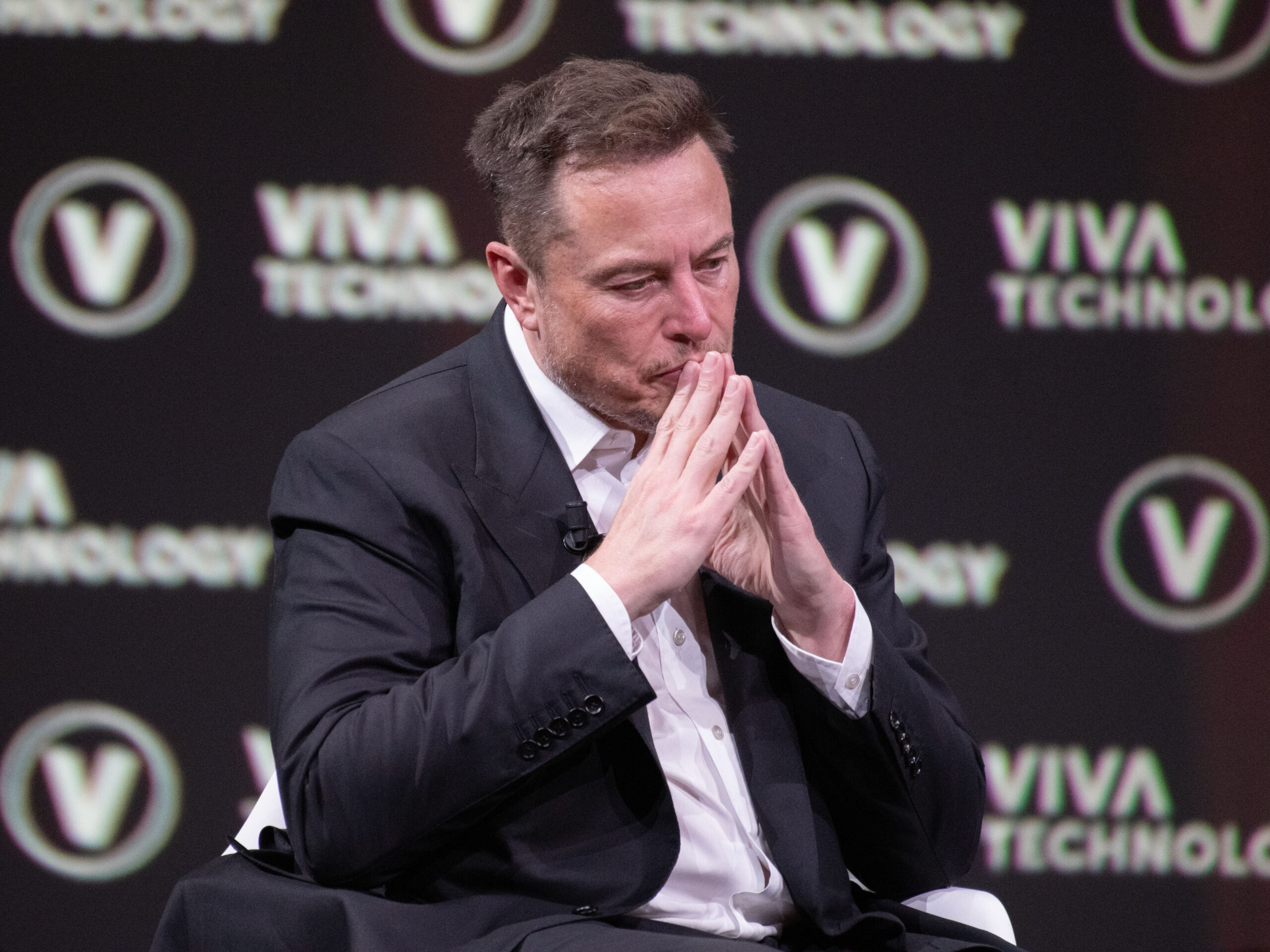
As of Thursday, 11 June 2026, after rocket, satellite, and AI company SpaceX raised a record $75 billion in its initial public offering, Elon Musk has officially become the world’s first trillionaire. Did he pull himself up by his own bootstraps? Is he a genius? Does he alone deserve the credit for accumulating such wealth?
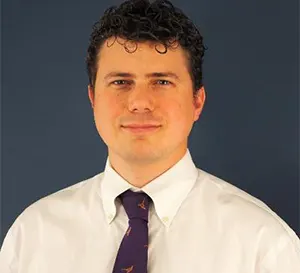
When Elon Musk crossed the trillion-dollar line, many media outlets interpreted it as a verdict on one man’s genius. But it is better to read it as a verdict on us and how badly we attribute success, according to Academy of Management Scholar Chengwei Liu of Imperial College London.
Psychologists call it the “romance of leadership”: When an organization does something extraordinary, we credit the person at the top and discount everything else. “The more extreme the outcome, the stronger the pull,” Liu said. “A trillion dollars is about as extreme as it gets, so the distortion is at its peak.
“Look at what the number rests on,” he said. “Nearly all of it is unrealized equity, not cash, and the bulk now sits in SpaceX, a private company whose value rests on an initial public offering that did raise $75 billion, but stock prices fluctuate. Tesla is down to about a sixth of his fortune.”
The irony is sharp, Liu noted: Musk’s largest asset is the one that U.S. government seeded most. SpaceX was built on NASA and Pentagon money, part of at least $38 billion in public funding over two decades. Yet we call this “self-made” while the public laid much of the track.
“This makes the world’s richest person the worst possible case to learn from,” Liu said. “His outcome is so tangled with early advantage, cheap capital, and a decade of asset inflation that you cannot separate the skill from the circumstances. Reverse-engineer him and you copy the luck, not the cause. Worse, you copy the traits that flatter survivors: extreme concentration, defiance, leverage. The same traits sit behind most founders who flamed out, but we never study them.”
So whom should we study instead? Research by Liu and his collaborators points one tier down to people who reached real wealth and influence without the head start: no rich network, no government runway, and no cheap money at the right moment.
“They had to convert genuine skill into results against the odds,” Liu said. “Their success carries signal precisely because it was not handed the same advantages. The outlier teaches you almost nothing. The underdog who arrived anyway teaches you a lot. This is not envy or a takedown of one founder; rather, it is a discipline.”
Take Sara Blakely. She started Spanx in 2000 with $5,000 of her own savings from selling fax machines and never took a single outside investor. When hosiery mills asked who was financing her, the answer each time was just her. Ask the same of Musk’s empire and the answer is the U.S. government: NASA, the Pentagon, electric vehicle (EV) subsidies, and years of cheap capital.
“Blakely’s company sold for $1.2 billion in 2021, nearly a thousand times smaller than a trillion-dollar fortune,” Liu said. “Yet hers is the more instructive case, precisely because it is smaller.
“She had no advantages to strip out, so what is left is the skill,” he said. “Musk had every advantage, which is why you cannot tell where the luck ends and the talent begins.”
The same pattern shows up in hard data. A 2023 study in European Sociological Review tracked 59,000 people whose cognitive ability was measured in their youth. Pay tracked ability closely up to about €60,000 ($69,327.30 USD) a year, then stopped. Beyond that figure, earning more said nothing about ability, and the very top earners scored slightly lower than those just below them. The study runs on a model Liu built: When luck and advantage have fatter tails than skill, the top of any ranking is where the two pull apart, he said.
Sweden is an illustrative case for skill to show through. It has more equal schooling and far less income concentration than the United States, where the top 1% take about a fifth of all income compared to Sweden’s one-tenth.
“Where advantage weighs more, the gap between success and skill grows wider, not narrower,” Liu said. “That makes an American fortune like Musk’s the natural place to expect it.”
The next time a single name is held up as the formula for success and wealth, Liu suggested asking a harder question: How much of this outcome would survive if you stripped out the timing, the capital, and the public backing? What is left after you subtract the luck is the only part worth imitating.
“A trillionaire tells us how generously markets and the public will credit one person for a collective, circumstantial result,” Liu said. “That is a fact about our psychology, not his merit.
“Treat it as a mirror, not a verdict,” he said. “The useful response is not awe.
“It is the question worth asking of every superstar: How much of this could anyone have repeated?”