
Published on: September 23, 2026 at 1:53 pm
Business leaders can achieve success through various approaches and strengths, and the same holds true for politicians—some are charismatic, others are ideological, and others are pragmatic.
Academy of Management Scholar Jeffrey Lovelace of the University of Virginia Darden School of Business attended the U.S. Military Academy at West Point and served two tours of duty in Iraq as an intelligence officer before leaving the Army to earn his Ph.D. at Pennsylvania State University. He applies this lens to categorize politicians, including U.S. presidents:
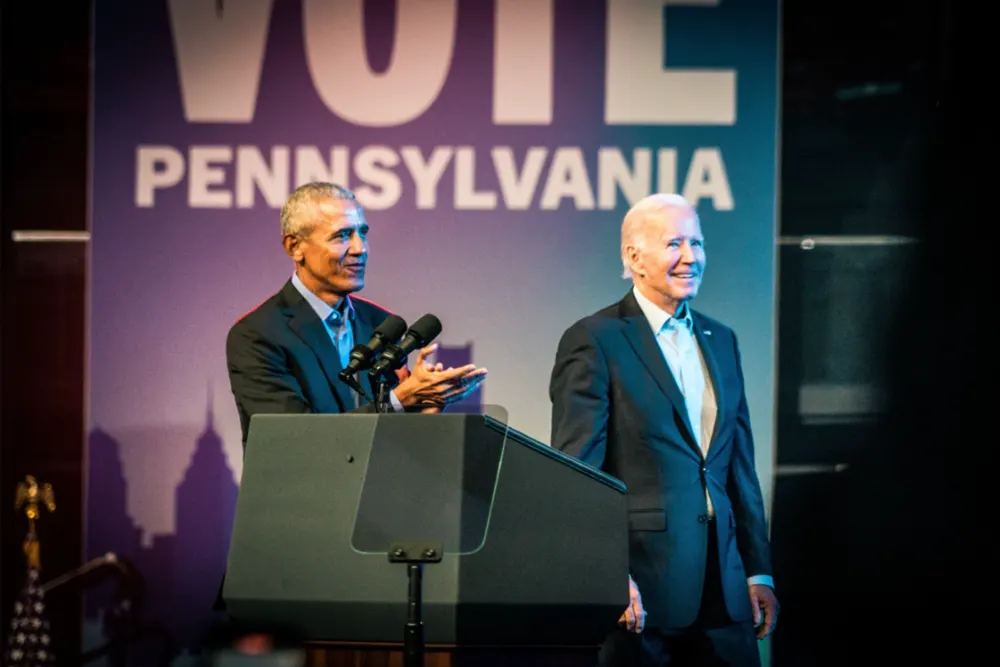
- Barack Obama was a charismatic leader.
- Joe Biden was a pragmatic leader.
- Donald Trump is an ideological leader.
“We actually tied this categorization of leadership styles to different types of political leaders, since they’re so widely known, and so when you look at individuals like President Obama, you can really see where the charismatic kind of approach worked well for him, through the promotion of the ideas of hope and change,” Lovelace said. “If you look at somebody like Donald Trump, he’s a more ideologically driven leader who talks to these values and oftentimes uses negative emotions, including warnings about the consequences of straying from those values, to advance his message.
“Then you can look at somebody like President Biden, who really presented himself more as a problem solver: ‘I’m here to fix what’s going on around us,’” he said. “He doesn’t necessarily have that emotionality that other leaders have and can tie into, but it’s more about, ‘I can fix the challenges that we were facing,’ and you can see how that led to each of those leaders ascending to power based on a different model of how they presented themselves.
“Now, I know a lot of people might argue what their effectiveness was overall, and there’s a lot of politics that get involved in that, but there are three examples of the types of actions they tend to take and the way that these leaders present themselves that probably most people are pretty familiar with.”
These categories aren’t cut-and-dried. Some leaders mix and match certain elements of each of these styles, and that may allow them to appeal to a greater percentage of their constituency.
“Originally, it was presented as just these three types, but we’ve been looking into this idea of mixed-model leaders who might demonstrate certain characteristics from each of the three categories and trying to pinpoint what makes them able to switch between some of these areas,” Lovelace said. “Who are the leaders that can do that effectively?
“There are questions of authenticity if they start switching between those types. And some of the work we’ve done empirically has looked at the idea that leaders have a primary type and a secondary type that they might fall back on,” he said. “We know from a lot of the leadership work we’ve done that context triggers the way that leaders approach things.
“We must never forget that leadership isn’t solely determined by the leader; it emerges from the leader’s interactions with followers and the surrounding context—each of these actors effectively has a say in how the leadership process develops.”
A sample of Lovelace’s AOM research findings:
- How CEOs Become A-List Stars
- Celebrity CEOs Often Get Typecast into One of Four Roles
- Underdog Status Can Motivate Teams to Beat the Odds