
AMD Call for Submissions: Registered Reports
This is a permanent call for submissions for Academy of Management Discoveries.

1 November 2025 @ 0:00 – 30 November 2025 @ 23:59 EDT
Submission Deadline: 30 November 2025
Submission window for Special Research Spotlight: 1–30 November 2025
The past two decades have seen the emergence and spread of activities that recognize and support neurodiversity in organizations. A primary focus has been on hiring and employment initiatives designed to remove barriers to employment for the roughly 20% of the global population (Doyle & McDowall, 2021) considered neurodivergent (e.g., attention deficit hyperactivity disorder, autism spectrum disorder, dyslexia). Historically, neuro-differences have been viewed through the prism of the “medical model of disability” as deficit, pathology, and weakness, as well as departures from population norms that need to be redressed or eliminated through intervention (Nelson, 2021; Doyle, 2020; Fisher & Goodley, 2007). Unsurprisingly, given the prevalence of this view, research suggests disproportionately high under- or unemployment rates among neurodivergent people (Ameri et al., 2018; Roux et al., 2013; Taylor & Seltzer, 2011; Krzeminska et al., 2019; Doyle, 2020). Despite significant barriers, many neurodistinct people have great interest in employment and possess employment-relevant strengths including average or above abilities and skills, some in high demand but scarce in the job market (Doyle, 2020).
The late 1990s saw increasing calls for framing neurodivergence and associated conditions in terms of difference rather than pathology and refocusing based on strengths rather than weaknesses (Singer, 1997; Kapp et al., 2013; Bruyère and Barrington, 2012). That is, there has been an embrace of neurodiversity based on the conclusion that there is natural variation in neurocognition in human minds inclusive of neurodivergence. Building on the “social model of disability” (Oliver, 1990), proponents of a growing neurodiversity movement have advocated the view that organizational and societal conditions, rather than individual deficits (weaknesses), have been responsible for the high under- and unemployment rates of neurodistinct individuals. These proponents also have argued that organizations and social institutions should take responsibility for addressing the barriers inherent in existing ableist systems that preclude neurodistinct people from employment. Prominent business organizations, such as Ernst & Young (EY), JP Morgan Chase, Microsoft, SAP, and others have responded by developing targeted hiring and employment approaches that attempt to redesign hiring practices and workplace conditions with a focus on being more inclusive of neurodiversity. These initiatives have deployed alternative recruiting, skills assessment, onboarding, on-the-job support, career management, and other processes (Khan et al., 2023; Annabi et al., 2021) to minimize biases that historically have prevented many neurominorities from accessing and working effectively in organizations (Austin & Pisano, 2017). Ultimately, the collective effort of neurodiversity employment initiatives morphed into a campaign known as the Neurodiversity@Work movement.
The employers involved in the movement estimate that their neuro-inclusion activities have led to more than 15,000 jobs newly accessible to neurodistinct candidates since 2004 (Austin et al., forthcoming). Although the focus of much practical activity is on improving employment access and outcomes for neurodistinct people in specific firms, the high incidence of neurodivergent conditions in the population makes it certain that neurodistinct people are already present in all organizations (LeFevre-Levy et al. 2023), though many are likely “masking” (Kidwell et al., 2023), i.e., using cognitive or behavioral strategies to hide their neurodistinct traits from neurotypicals thereby conforming to conventions of neurotypical social behavior (Barkley, 2010; Sedgewick et al., 2021). The implications of masking on the well-being of these employees, the organization’s effectiveness, and other outcomes are poorly understood. Adopting neuro-inclusive approaches have led neurodistinct employees, who may have been masking or camouflaging indicators of being neurodistinct, to come forward and disclose their neurodistinct conditions and organize into networks within firms, but the effects are not entirely known (Austin, et al., forthcoming). Moreover, despite these very significant developments, theorizing about neurodiversity within organizations has badly lagged practice. How neurodiversity manifests within management and organizations remains ripe for discovery (LeFevre-Levy, et al., 2023). There is, of course, an established and evolving tradition of general DEI research (see Roberson, 2019 for a review), but the degree to which that body of work is relevant to neurodiversity and neuro-inclusion is also unclear. Indeed, much of what is written about neurodiversity in employment is spread across many academic disciplines and, with a few exceptions (e.g., Drader-Mazza et al., 2024; Ezerins et al, 2024; Krzeminska et al., 2019; Johnson & Joshi, 2016), work on this topic has been largely absent from management journals (LeFevre-Levy et al. 2023).
[1] We use the word “neuorodistinct” to describe people, rather than more common alternatives, such as “neurodivergent” or “neuroatypical,” because distinctness implies difference without reference to a supposedly preferred status of “normal” or “typical.”
Neurodistinct people face unique barriers to obtaining and sustaining employment, in part because neurodivergence is invisible, leading to misunderstandings and skepticism in a society that primarily recognizes visible markers of disability (Davis, 2005). In addition, neurodivergence is linked to fundamental differences in cognitive and sensory processing, as well as in social interaction. These differences may be present in ways that are especially challenging in an employment context where there are strong norms regarding social interaction and communication styles (both verbal and nonverbal), as well as general behaviors. Interviewers, workplace peers, or managers have characterized the interaction styles of neurodistinct (e.g., autistic) employees as “overly blunt,” lacking empathy and expected emotional expression, and even “weird” (Treweek et al., 2019; Martin et al., 2023), without acknowledging or even recognizing that this reflects neurotypical expectations and bias. This bias suggests the need for novel approaches that more fundamentally engage with and reflect rethinking of neurotypical norms. Like people identified with other marginalized groups, neurodistinct people can become stigmatized (Bos et al., 2013). These realities necessitate exploratory empirical work to more precisely identify the range and form of the biases and their consequences for individuals and organizations. In addition, there is a need to explore interventions that can surmount these biases across a range of domains, including but not limited to hiring and selection, onboarding and socialization, ongoing inclusion, performance management, and work design (see also Annabi & Locke, 2019). It also would be useful to see which, if any, existing approaches to debiasing organizational processes help to make organizations more neuro-inclusive (e.g., Goldin & Rouse, 2000). We elaborate on three themes we see as especially promising for exploring the macro, meso, and micro processes related to neurodiversity in the workplace.
For all the above reasons, and more, we believe neurodiversity in management and organizations is deserving of empirical exploration on its own terms. It is clearly a nascent field that can benefit from a discovery-based approach that examines the rich yet underexplored phenomena detailed above and elaborated below. This is the reason for this AMD Spotlight.
The goals of this Spotlight are to publish novel empirical explorations that move this nascent field toward more developed theorizing. These empirical explorations might be specifically focused on neurodiversity or might leverage the distinct character of neurodiversity to explore more general diversity or other organizational issues. We aspire to attract work that takes seriously both the charge to develop a richly contextualized understanding of a key empirical discovery and develop its implications for a more generalized understanding of work, strategy, organizations, management, and institutions.
We see these as complementary goals—recognizing that generalizability is enhanced, rather than harmed, by careful attention to contextualizing research (Johns, 2006; Rousseau & Fried, 2001) —and the goals seem particularly well-suited to the nature of AMD as an outlet for “articles motivated by research questions that address compelling and underexplored phenomena … that present clear and compelling discoveries: empirical findings that challenge existing assumptions while opening new theoretical paths or that otherwise promote future, ‘down-the-road,’ theorizing” (AMD website). We also encourage submissions that involve and engage practitioners in the development and presentation of discoveries (for more, see the recent AMD “From the Editors” essay on practitioner involvement in empirical research; Ben-Menahem, 2024).
We provide below a non-exhaustive list of topic areas that might be appropriate for this Spotlight on neurodiversity. It is not our intention in creating this list, however, to constrain the ways in which authors might explore this nascent area of management and organizational research. As Doyle and McDowall (2021) have noted in their recent review of the literature, management research on neurodiversity remains largely “empty.” We welcome submissions from a broad range of conceptual traditions, methods, and domains. Moreover, most of the topics below are subject to empirical exploration across different stakeholders, such as neurodistinct employees, neurodistinct leaders, neurotypical leaders leading a neurodiverse workforce, pertinent organizations, and actors in the policy (e.g., legal, governmental) or societal context of organizations. Questions about the suitability of a particular topic should be directed to a member of the Guest Editor team.
Some suggested areas that authors might address include the following:
AMD is a premier journal for the empirical exploration of data describing or investigating compelling phenomena. AMD is not a journal for deductive theorizing or hypothesis testing. Authors are encouraged to present findings without the need to “reverse engineer” any theoretical framework or hypotheses. AMD publishes discoveries resulting from both quantitative and qualitative data sources. AMD articles are phenomenon-forward rather than theory-forward. This means that AMD papers look quite different in comparison to articles sent to other empirical journals. The goal at the front end of an AMD paper should primarily be to demonstrate the novelty/interestingness of the phenomenon and why current theory fails to explain it. The discussion section of an AMD paper is where a plausible theoretical explanation—the theoretical contribution—is provided. The goal for every AMD paper is for discoveries derived from empirical exploration to open new lines of research inquiry. For further information about the goals of AMD, we encourage potential submitters to review recent “From-the-Editors” essays (Miller, 2024; Rockmann, 2023) and to visit the AMD website.
When submitting your manuscript, for “Manuscript Type,” please select Special Research Spotlight: Neurodiversity in Management and Organizations. (Please note: this Manuscript Type will not be available to authors until November 2025.) Manuscripts should be formatted according to the AOM Style Guide.
Spotlights are a new publishing venue at AMD: mini research forums that feature studies of complex and poorly understood phenomena (e.g., new science, technology, human resource strategies) with potentially path-breaking implications for management and organizations. Each issue features a Guidepost essay by a prominent scholar or team of scholars along with one to three select articles that highlight empirical discoveries with the potential to shape the evolution of theory on the focal phenomenon and related managerial and organizational challenges. Spotlights work on an accelerated review cycle, with a submission deadline 7-9 months after the Call for Papers, and target publication dates 12-15 months following the Call. Spotlights continue to grow, as related content is tagged in subsequent issues, creating ongoing, distributed conversations.
Standard guidelines apply to papers submitted for this Spotlight. Manuscripts may be submitted as regular papers or as Discoveries-through-Prose. Discoveries-through-Prose are crafted in more creative and engaging ways than traditional papers. When composing such manuscripts, we encourage authors to relax their use of traditional headings and traditional “academic writing” in order to create a compelling narrative from start to finish. More information about Discoveries-through-Prose can be found on the AMD website.
This is a permanent call for submissions for Academy of Management Discoveries.
Are you thinking of submitting a manuscript to AMP? We have a terrific global team of engaged editors eagerly awaiting the opportunity to help develop your work.
Discoveries-through-Prose empower authors to craft their manuscripts in nontraditional ways that make for tighter, more engaging narratives.

Interested in publishing an Academy of Management Collection? Submit an original essay tied to articles selected from the AOM archive.
Actionable Solutions to Real-World Problems of Practice and Policy Based on Prior Academy of Management Publications
AMIO: Academy of Management Inside Organizations, a new open access journal, is now open for submissions on the inner dynamics of organizing and work.
The conference aims to provide a high-level academic exchange platform for management scholars worldwide to discuss paradigm shifts, theoretical innovations, and methodological breakthroughs in management research in the AI era.
This symposium brings together university educators to rethink how entrepreneurship is taught. The day will include two case sessions and two experiential sessions. All sessions will incorporate the Causal, Adaptive, Visionary, and Effectual (CAVE) framework for organizing the content in your entrepreneurship curriculum.

For this special issue, we invite submissions to all of AMLE’s peer-reviewed sections, including Research and Reviews, Essays, and Book and Resource Reviews.
AOM’s Teaching Community and the Organizations and the Natural Environment (ONE) Division Teaching Team invite educators to this webinar to explore practical ways to teach sustainability in management education from leading educators.
In partnership with AOM’s Community Accelerator Program and Entrepreneurship Division, the workshop will strengthen the skills of business faculty and PhD students to foster the next generation of transformative entrepreneurs using research-based methods and real-world insights.
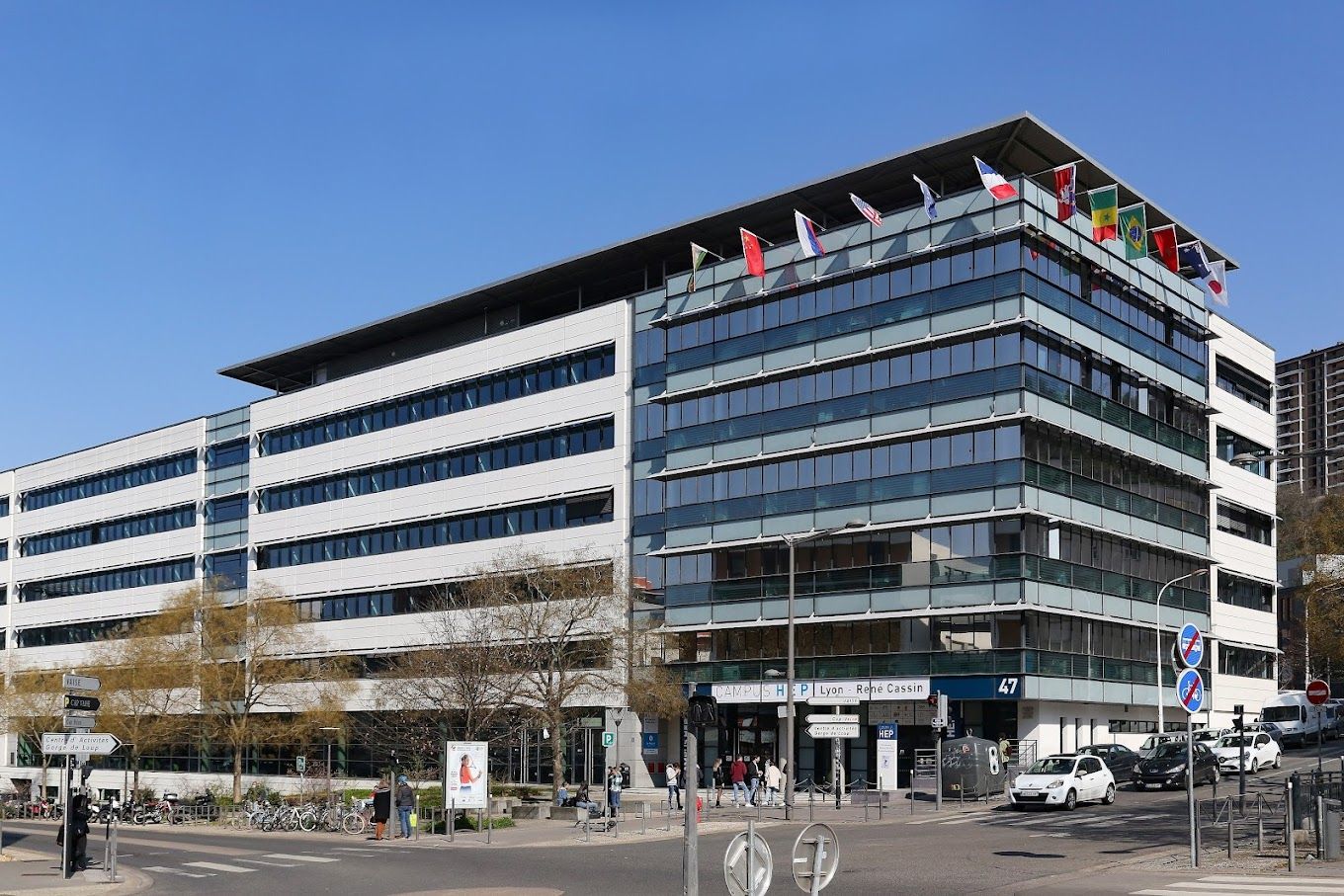
Sponsored by IDRAC Business School (Lyon, France), this hybrid workshop is open to students, practitioners, and scholars from around the world.