
AMD Call for Submissions: Registered Reports
This is a permanent call for submissions for Academy of Management Discoveries.

6 October, 2026 @ 9:00 – 12:00 EDT
Delivery: Live and virtual
Connect the way research data is structured to the statistical models used to analyze it. Designed primarily for doctoral students building their methods foundation
Data analyzed in organizational research frequently violates the basic regression assumption that errors are independent and unrelated to predictors. This tutorial uses examples and simple illustrations to show why this non-independence can be problematic in both cross-sectional and longitudinal data. The tutorial also gives a high-level overview of common ways to address non-independence, with a focus on how addressing non-independence can expand a researcher’s research methods repertoire and strengthen the theory-methods-data link.
Dr. Paul Bliese, University of South Carolina
Paul D. Bliese is the Department Chair and Jeff B. Bates Chaired Professor in the Management Department at the Darla Moore School of Business at the University of South Carolina. He received a Ph.D. from Texas Tech University. After graduate school, he worked for 22 years at the Walter Reed Army Institute of Research and retired as a Colonel. Throughout his career, Dr. Bliese has led efforts to use statistical methods to answer complex organizational problems and advance theory and practice. He developed and maintains the multilevel package for R and has published in a variety of journals, including the Academy of Management Journal, the Journal of Applied Psychology, the Journal of Management, Organizational Research Methods, and Organization Science. He served as an Associate Editor for the Journal of Applied Psychology from 2010 to 2017 and as the Editor in Chief for Organizational Research Methods from 2017 to 2021. In 2024, he began a new role as the first Deputy Editor for Research Methods for the Academy of Management Journal.
One registration includes all four live tutorials, their released resources, and related program activities.
This is a permanent call for submissions for Academy of Management Discoveries.
Submission Deadline: 31 January 2027 ATTENTION! Please disengage the autopilot. Check the muscle memory. We do not want more of the same. Academy of Management Perspectives (AMP) is different. Are you thinking of submitting a […]
Discoveries-through-Prose empower authors to craft their manuscripts in nontraditional ways that make for tighter, more engaging narratives.
Interested in publishing an Academy of Management Collection? Submit an original essay tied to articles selected from the AOM archive.
Actionable Solutions to Real-World Problems of Practice and Policy Based on Prior Academy of Management Publications
Self-nominations are being sought for the position of editor (or co-editors) of the Academy of Management Perspectives. The person(s) selected will become editor-elect on 1 July 2027 and editor on 1 January 2028. The term of office as editor is three years.
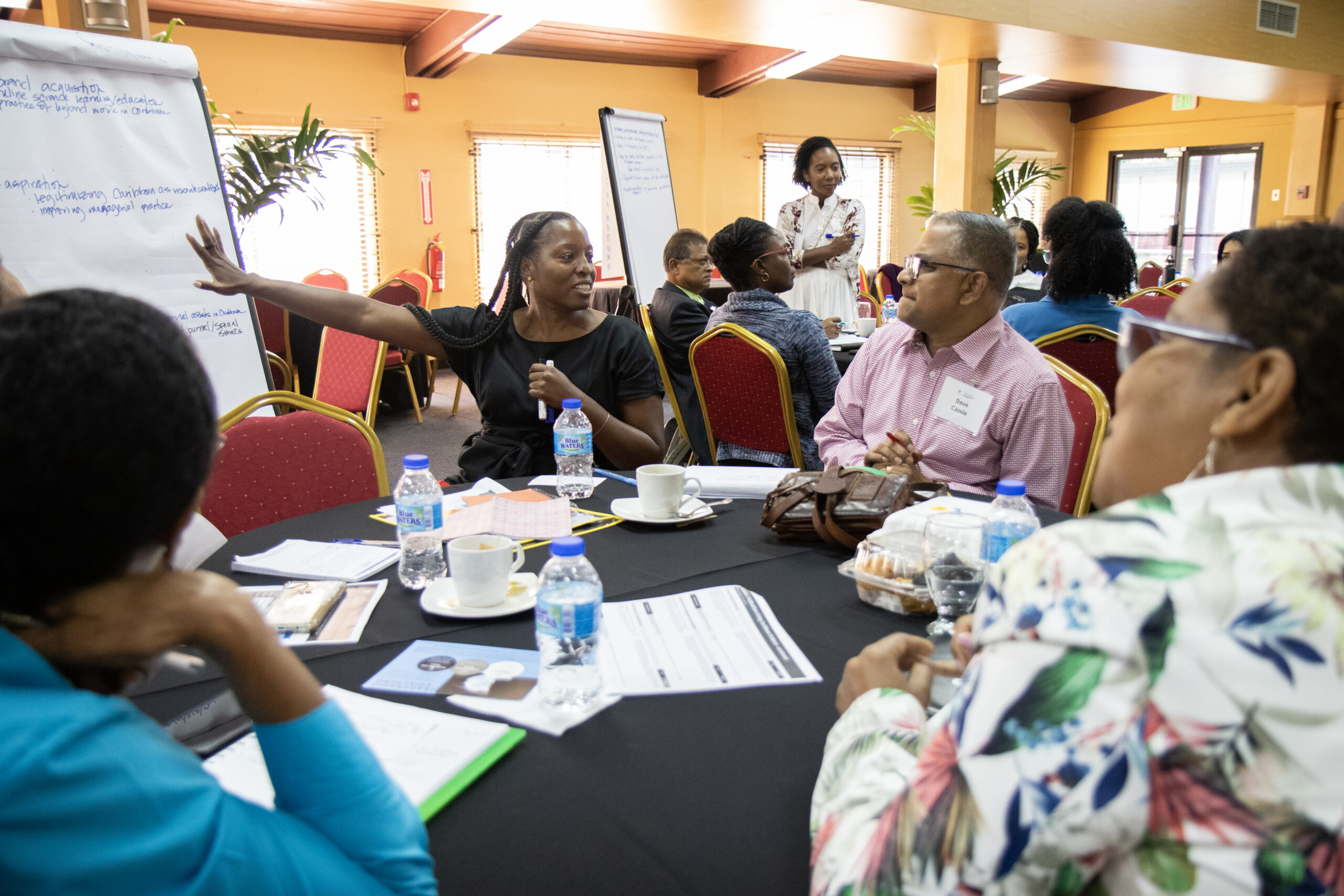
Self-nominations are sought for the following founding leadership roles during the Teaching Community’s three-year pilot: Teaching Community Founding Chair; Teaching Community Committee Leaders
Practical Solutions for Coping with Rising Geopolitical Risk. Submission period 1-30 September 2026
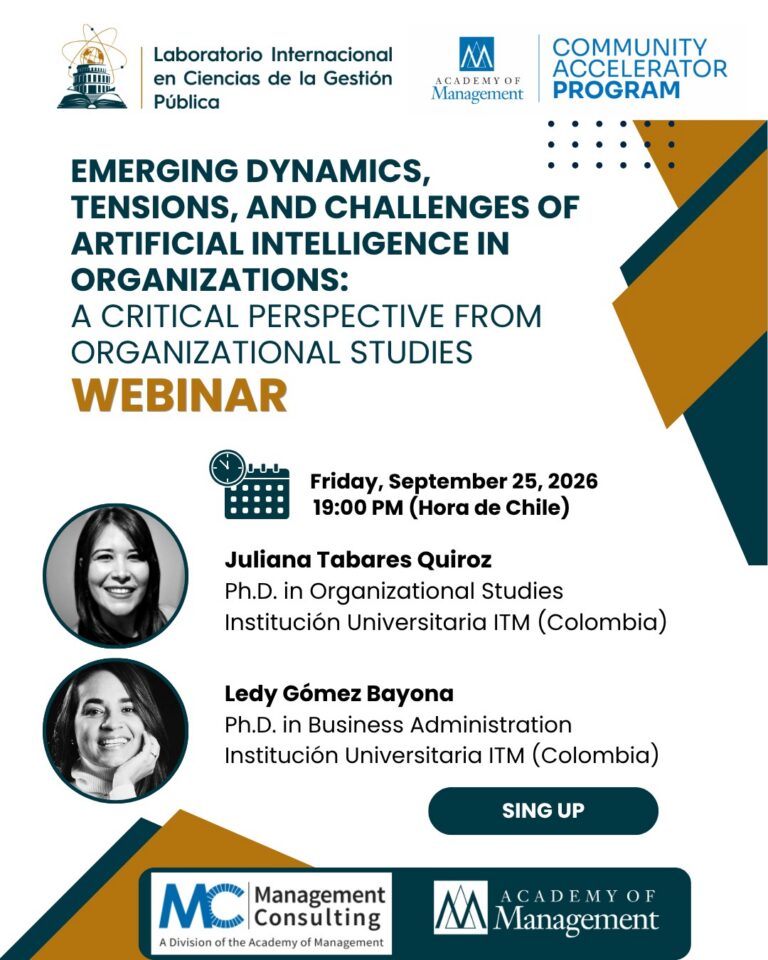
Presented in collaboration with AOM’s Community Accelerator Program, this Spanish-language webinar hosted by the Laboratorio Internacional en Ciencias de la Gestión Pública presents a critical examination of artificial intelligence (AI) […]

Recent decades have seen rising scholarly, policy, and media attention towards the mental health of university populations. While there is strong evidence of mental health concerns among students, there are […]
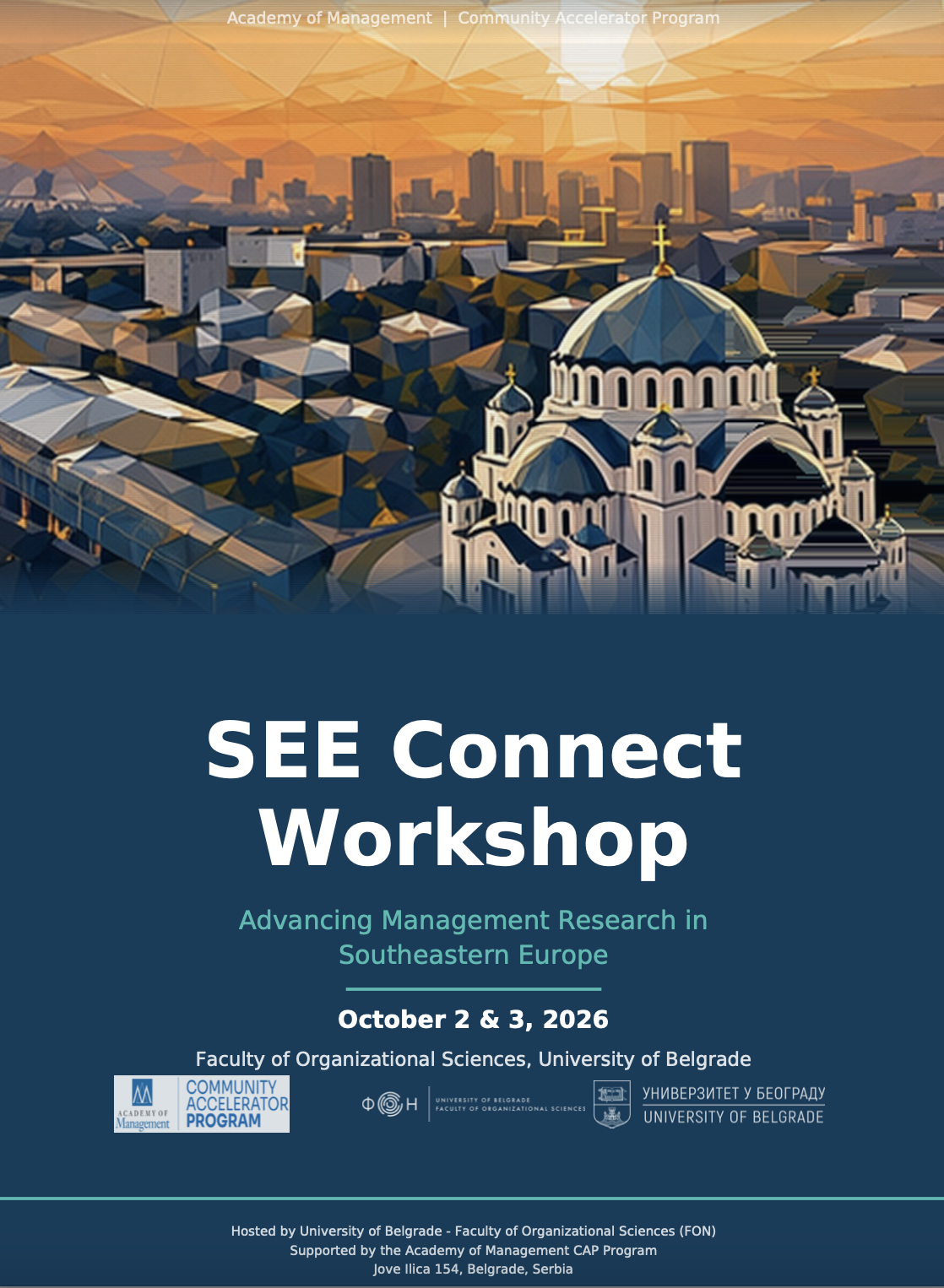
SEE Connect is an Academy of Management initiative under the Community Accelerator Program (CAP), designed for doctoral students, young researchers, and early-career academics working across all areas of management research – particularly the domains of the AOM Strategic Management (STR), Technology and Innovation Management (TIM), and Organizational Behavior (OB) divisions, spanning strategy, innovation, technology, and organizational studies.
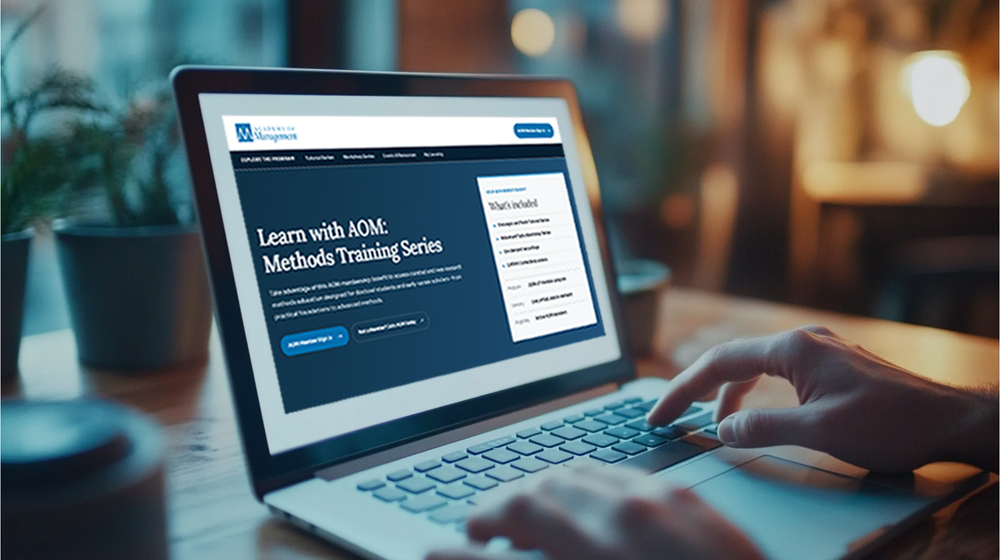
Delivery: Live and virtual Connect the way research data is structured to the statistical models used to analyze it. Designed primarily for doctoral students building their methods foundation What to […]